
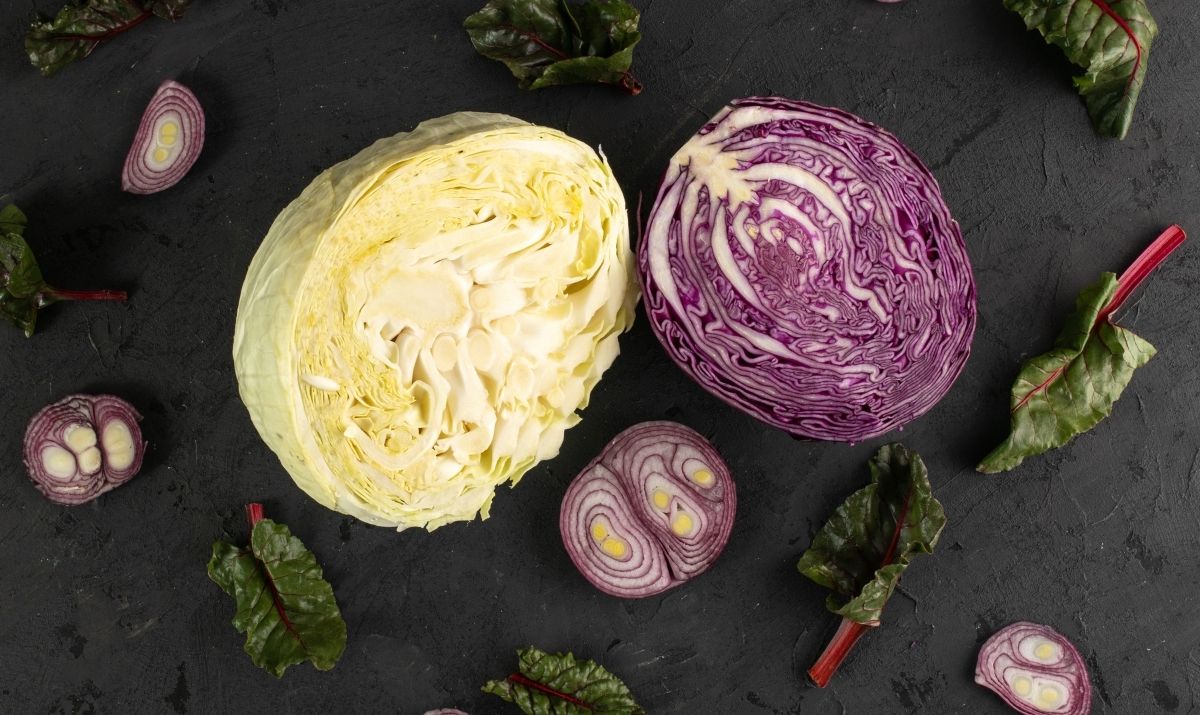
Much like our Christmas favourite, the Brussels Sprout, cabbages get a bit of a bad rep. It doesn’t take long for them to go from under to overcooked and as a result, many of us associate cabbage with a smelly and slimy addition to our plates that would go uneaten. But that doesn’t have to be the case. When done correctly, cabbages are a great vegetable to work with and with its different varieties, can be added to a number of dishes – as Christmas approaches and red cabbage starts appearing on menus, we thought we’d shine a spotlight on this highly versatile veg.
There are lots of varieties of cabbage, here are a few of them…
Spring Cabbages – usually harvested from February through to June. These cabbages tend to be loose leaved and conical in shape. They are usually labelled as spring greens or collards.
Summer Cabbages – harvested from the summer through to November time, these are round and the leaves are tightly compressed. Look out for ball headed or drumhead cabbages. There are some summer options that are more conical like spring ones, like the greyhound and hispi ones.
Winter Cabbages – these are the ones you’ll find from now until next spring. They are more hardy than other varieties and are ball or drumheaded. There are several types, but the most popular is the Tundra.
Savoy Cabbage – this is one of the most popular varieties to cook with and has a pleasing taste and texture. It is ball headed and has crinkled leaves.
Red Cabbage – you’ll find this variety on Christmas menus throughout the festive season. It is also a good addition to salads.
Chinese Cabbages – also known as Pak Choy, looks more like a lettuce than a cabbage and is another good one for cooking with.
How to store
One reason why people struggle with cabbage is because of improper storage. You should keep it in the fridge to stop it getting too dry. Loose leaf cabbages, like a Savoy, can last for up to two weeks, while closed leaf varieties can last for around a month. Whichever you go for, keep it in the fridge to keep them fresh.
How to cook
When it comes to cooking your cabbage, keep cooking times as brief as possible unless you’re using a red cabbage – those need to be braised slowly for the perfect winter dish.
Top tips
Did you know you don’t have to throw away a limp looking cabbage? You can revive limp leaves by putting them in a bowl of iced water for a few minutes.
Did you know you can freeze cabbage? Slice, blanch for 1-2 minutes and then put in iced water to cool it down. Pat down and then freeze.
When picking your cabbage try to go for ones with crisp, bright leaves and no holes.