
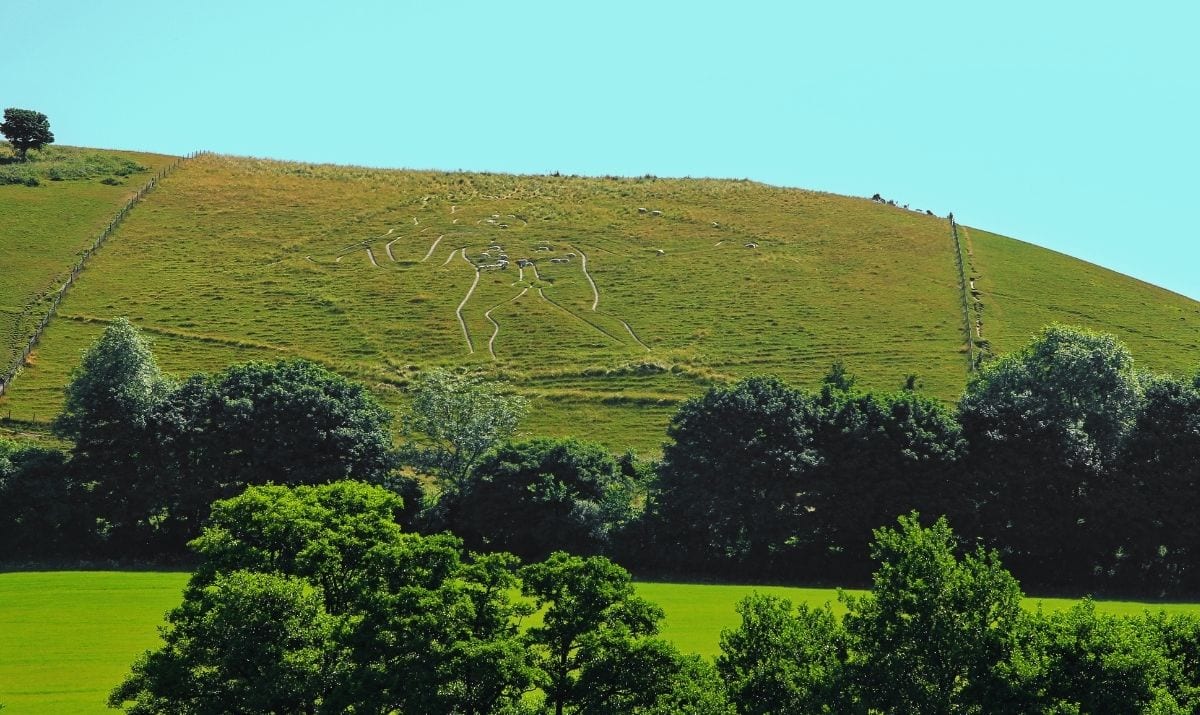
Archaeologists who have been studying soil samples from the Cerne Abbas Giant have revealed that they believe that the ancient figure was sculpted into a chalk hillside was created during the late Saxon period.
The studies also hinted that the figure was forgotten for generations after first appearing before being later rediscovered.
Archaeologists began their investigation of the giant prior to the first 2020 lockdown, after taking soil samples from the elbows and feet. The research showed that the deepest layer of sand at the sculpture dated back to 700 AD, which places it during the Anglo Saxon period of British history. However, the earliest documented record of the Cerne Abbas giant is dated 1694, where a church warden reported the figure being repaired. This has sparked the theory that the giant may have fallen into disrepair and then was rediscovered, which would explain why it doesn’t feature in records from the Tudor reign or from Cerne Abbey, which was founded in 987AD.
The Cerne Abbas Giant is a large depiction of a naked man wielding a club. Though its true origins are unknown, it is thought that it might be associated with Saxon or Roman deities and has become a huge part of the local culture and folklore. The figure is now a scheduled monument of England and the site is owned by the National Trust. The figure features on a number of products created in the Cerne Abbas region.